Agriculture QR Code Generator for Farm Operations & Traceability
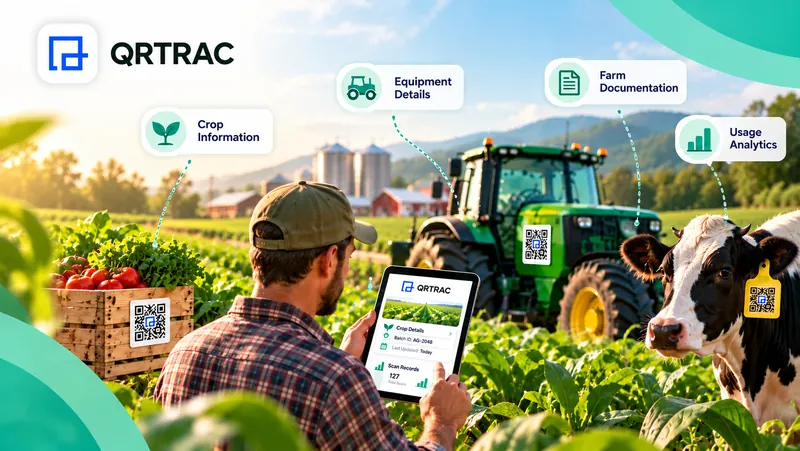
Use our specialized agriculture QR code generator to create dynamic QR codes connecting produce crates, farm equipment, crop batches, and compliance documentation to digital portals. Update destinations anytime and monitor scan engagement across fields and markets.
No credit card required • Free 14-day trial • Instant dynamic redirects
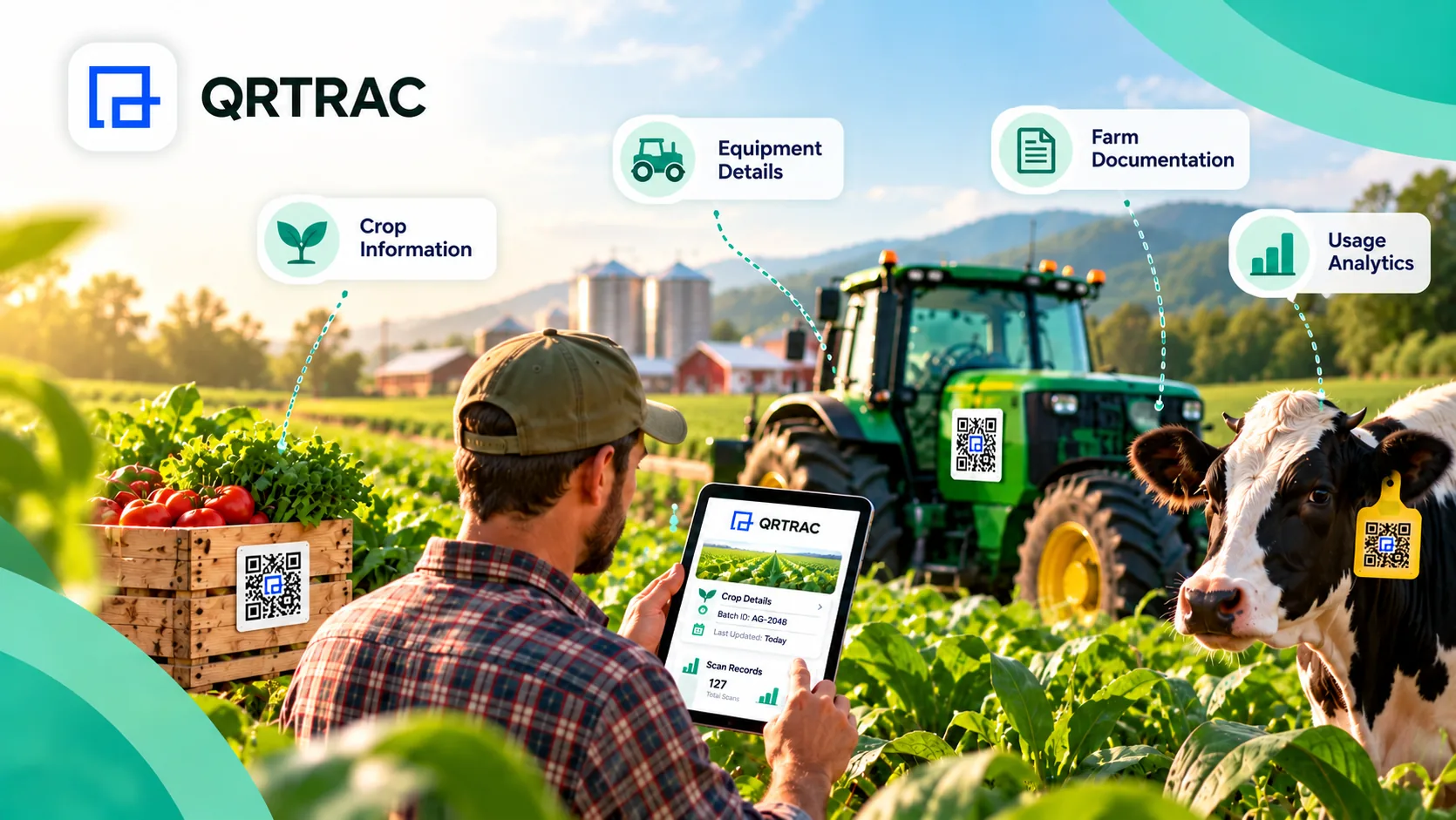











Core QR Code Features for Agricultural Operations
Explore the core platform capabilities engineered into our QR code generator for agriculture to create, organize, brand, and update QR codes across farm assets, product packaging, and field documentation.
Dynamic Destination Management
Redirect QR codes to new destination URLs as crop batches progress, equipment manuals update, or distributor guidelines change, without replacing printed labels.
Bulk QR Code Generation
Upload spreadsheets of harvest lot numbers, field blocks, or equipment asset tags to generate hundreds of individual dynamic QR code types in a single batch.
Custom Branding & High-Contrast Design
Add farm logos and select crisp, high-contrast borders and colors to ensure labels remain easy for standard mobile cameras to register in variable field lighting.
QR Code Scan Analytics
Review scan counts, peak access hours, and available device insights to understand when and how frequently personnel, buyers, or inspectors access linked resources.
Editable Destinations After Printing
Correct typos, redirect to updated safety sheets, or point harvest crates to newly published batch pages without discarding costly rolls of pre-printed tags.
Print-Ready Vector Downloads
Export QR codes in high-resolution vector formats (SVG, EPS, PNG) ready for direct thermal label applicators, durable vinyl stickers, or signage printers.
Track Your Agricultural Operations
Use QR codes as practical digital doorways connecting physical farm assets to your existing cloud documentation and web software.
Crop Batch Traceability
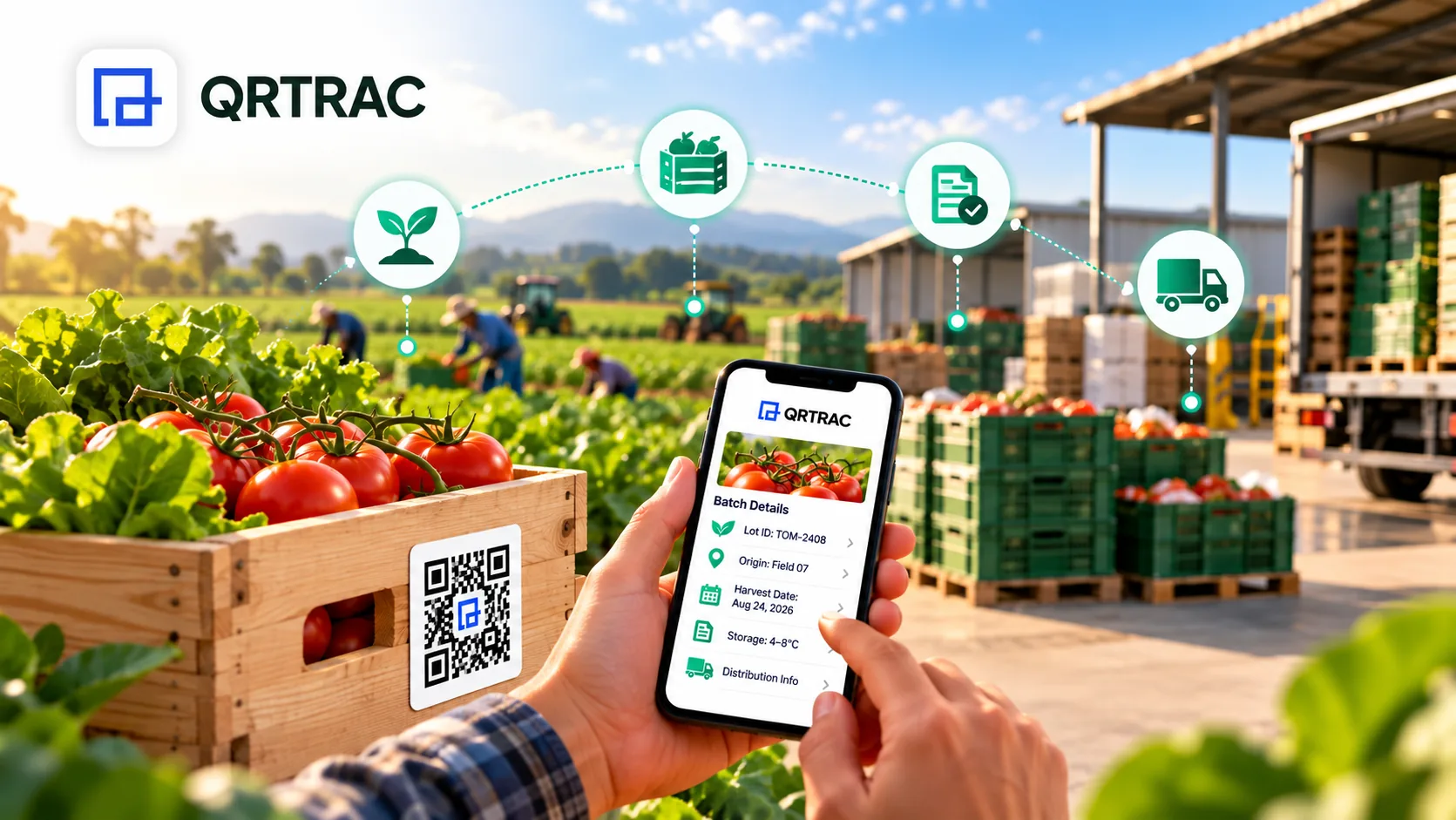
Connect QR labels on harvest containers, packaging, or batch documents to relevant product and handling information. Field crews and buyers scan to open harvest details, field origin notes, or packhouse records hosted in your system.
Livestock Records
Link animal identification tags, pens, or pasture markers to configured animal records or an external livestock-management system. Scanning opens vaccination history, pedigree notes, or feeding schedules on a mobile browser.
Farm Equipment Management
Link labels on tractors, tools, pumps, and machinery directly to operator manuals, maintenance documentation, and service log forms. Operators scan on-site to verify fluid specifications or submit maintenance requests.
Manage Crop Batches from Harvest to Distribution
Dynamic QR codes provide a straightforward way to connect physical crop batches, produce crates, and pallet tags to relevant digital documentation across their journey.
Crop and Batch Identification
Assign distinct lot numbers and field block origins encoded in dynamic links.
Harvest and Handling Documentation
Link crates to picking date records, harvest crew logs, or specific packinghouse notes.
Product Information and Storage Instructions
Share recommended temperature settings, humidity ranges, and consumer-facing origin profiles.
Quality-Control and Distribution Documents
Direct buyers and inspectors to digital inspection sign-offs hosted in your linked management tool.
* QRTRAC provides the QR code and destination-management functionality. Detailed batch records, automatic traceability, and regulatory reporting depend on your linked system.
Simplify Farm Equipment Maintenance
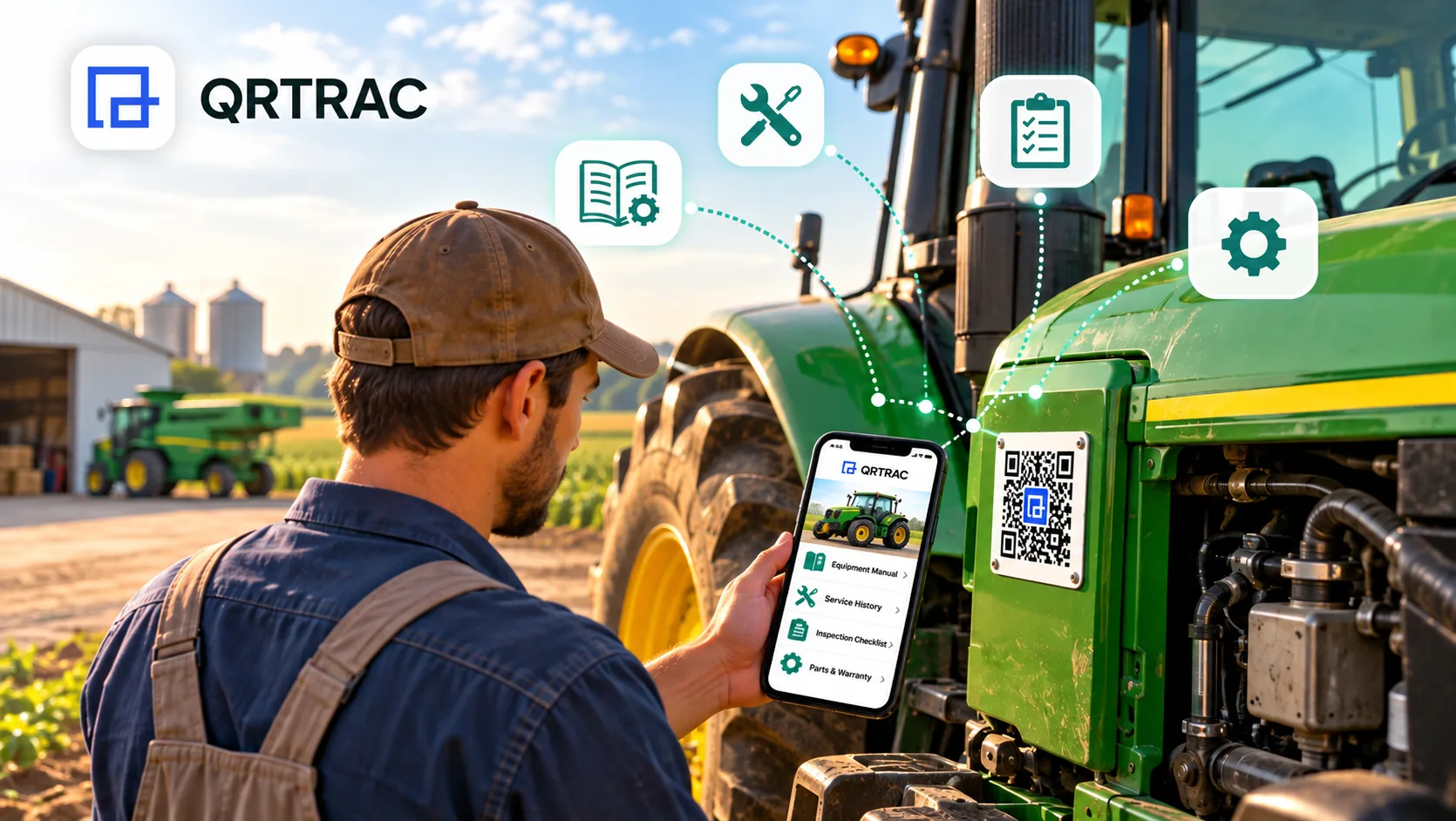
Place QR codes on agricultural machinery, tractors, irrigation pumps, and utility vehicles to give operators and field technicians immediate access to vital documentation directly from their mobile phones.
- Tractor & Harvester Manuals: Link to digital PDF operating guides and safety procedures.
- Pump & Irrigation Documentation: Provide instant access to valve schematics and pump specifications.
- Service History & Inspection Forms: Direct mechanics to digital inspection logs or service reporting forms.
- Equipment Identification: Organize serial numbers, asset tags, and warranty links by machine.
Attach a QR Label → Scan the Machine with a Phone → Open the Linked Manual or Service Record
* Note: QRTRAC creates and manages the QR codes. The platform does not independently detect equipment faults, track live GPS locations, or schedule servicing.
Connect Farms with Buyers and Distributors
Agricultural businesses can place QR codes on crates, master cartons, pallets, and shipping documents to provide downstream partners with instant access to product and batch information.
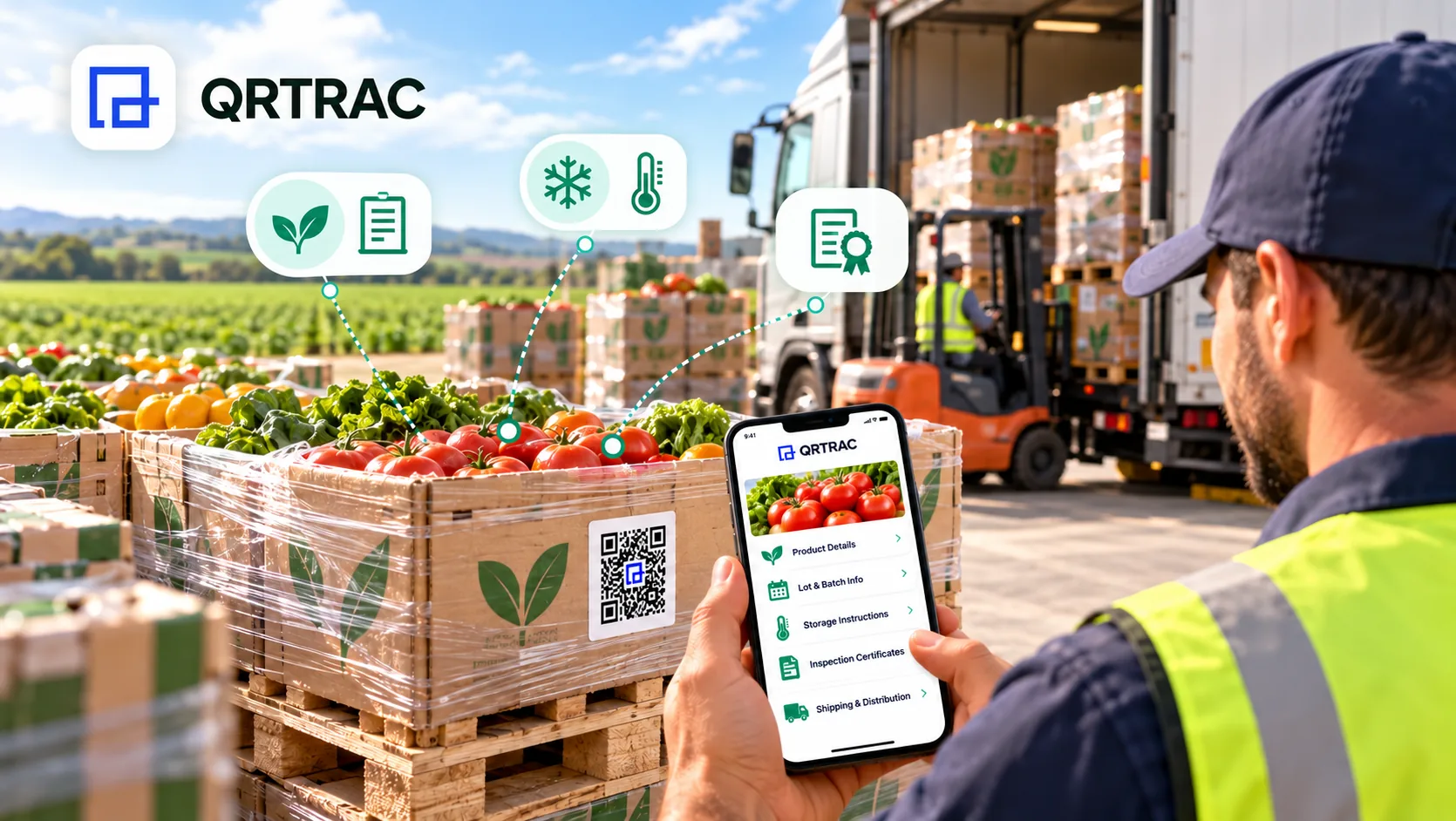
Product & Batch Information
Give wholesale buyers and distributors direct access to crop varieties, harvest dates, grower profiles, and lot numbers when receiving pallets.
Scannable packaging & GS1 digital linksHandling & Storage Instructions
Share proper cold-chain temperature limits, stacking requirements, and ethylene sensitivity guidelines to reduce spoilage during transport.
Accessible cold-chain PDF instructionsQuality & Inspection Documents
Link shipping manifests to digital certificates of analysis, organic compliance paperwork, and third-party inspection sign-offs.
Dynamic quality control recordsOrganize Farm Records and Inspection Documents
Use QR codes as physical access points posted in barns, packhouses, chemical storage areas, and field gates to direct workers, inspectors, and managers to the right documentation without digging through paper binders.
Standard Operating Procedures
Link wash stations, packing lines, and equipment bays to digital SOPs and safety guides.
Inspection Checklists
Allow supervisors to scan and complete digital inspection forms from mobile phones.
Chemical & Safety Records
Link storage lockers to Safety Data Sheets (SDS) and re-entry interval documentation.
Farm Management Records
Connect field gate signs directly to specific block records within your cloud database portal.
* Note: The QR code serves as an access point to information. It does not act as an independent database, document-validation system, or compliance certification authority.
Configured Resource Examples
How Agricultural QR Codes Work
Deploy dynamic QR codes across your farm and supply chain in four practical steps.
Create
Generate a QR code individually in the dashboard or upload a CSV file to create codes in bulk for batches, equipment, or assets.
Connect
Link the code to your digital page, web document, inspection form, or supported external farm-management system.
Deploy
Download high-res vector files and print on suitable labels, packaging, outdoor signage, or documentation.
Manage
Update destination URLs whenever documentation changes and review available scan analytics in your dashboard.
Understand Engagement with Agricultural QR Codes
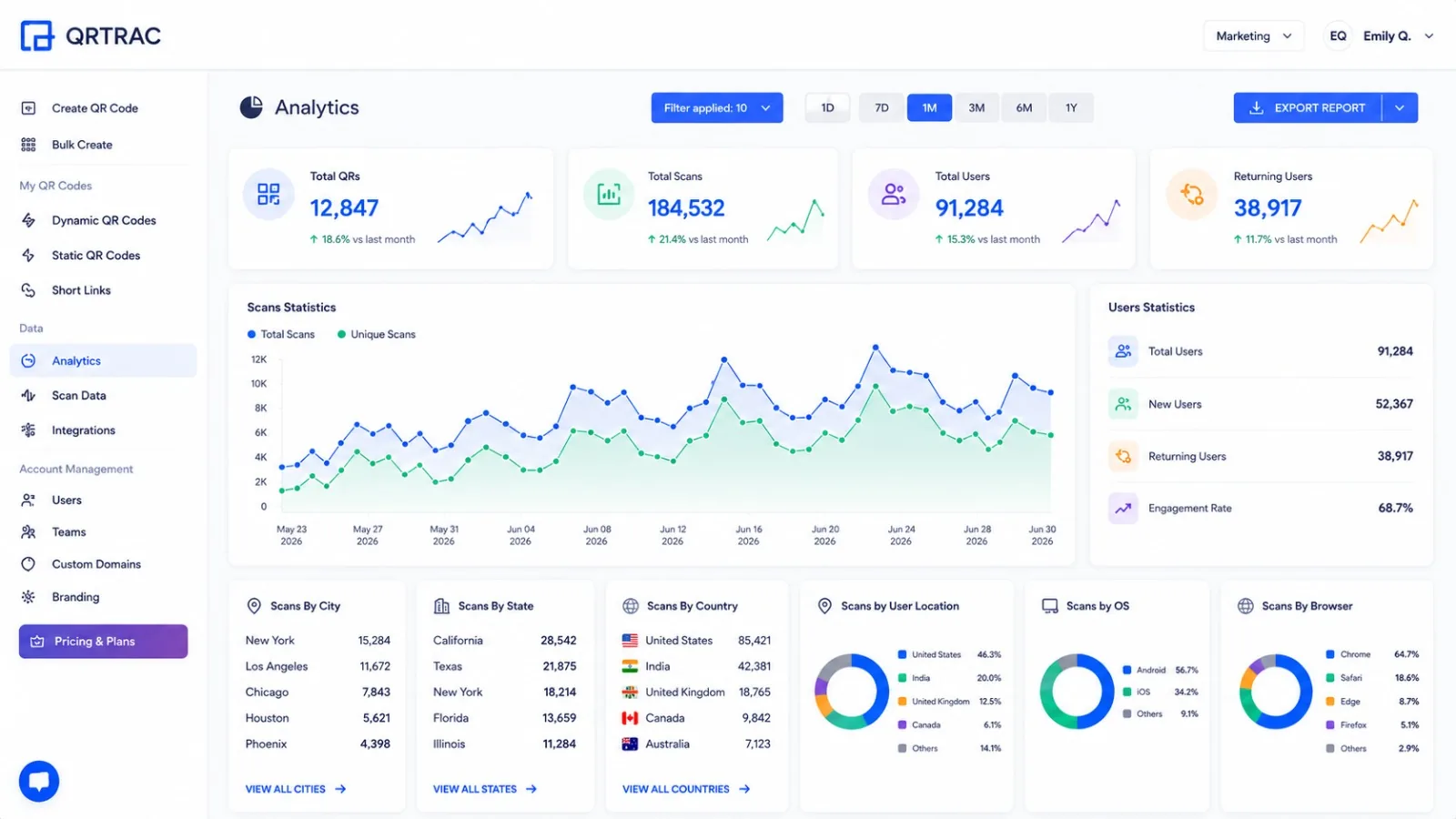
Scan analytics help farm managers and product marketers understand how frequently and when QR codes are accessed across different campaigns, product lines, and facilities.
- Compare Scan Activity: Measure engagement differences across different product labels, pack sizes, or print materials.
- Scan Timing Insights: Identify peak hours or seasonal trends when workers or consumers access linked resources.
- Device & Location Data: View general operating system distributions and regional scan locations where available.
- Evaluate Label Placements: Determine which signage locations or packaging QR codes attract the highest scan engagement.
QR Codes for Real-World Farm Conditions
Agricultural environments present real physical challenges. Here are practical guidelines for planning durable, readable QR labels in the field.
Select Appropriate Label Materials
Use weatherproof synthetic vinyl, polyester, or laser-marked anodized metal tags designed to endure sunlight, moisture, and temperature fluctuations.
Ensure Proper Dimensions & Sizing
Scale code dimensions for expected scanning distances. Small tags for ear tags or produce clamshells need close focus; field gate placards require larger dimensions.
Position for Visibility & Access
Affix labels on clean, flat surfaces protected from direct friction, heavy wheel spray, or areas where machinery clamps may shear the label.
Test Under Actual Field Lighting
Verify scanning with standard smartphones under direct midday sunlight, greenhouse glare, and low-light dusk conditions before full print runs.
Inspect & Replace Damaged Labels
Establish periodic checks on critical machinery and field markers. While error correction tolerates minor surface marks, severely damaged labels should be replaced promptly.
Maintain High Color Contrast
Stick to dark foregrounds on clean white or light backgrounds. Avoid low-contrast color combinations that make camera focus difficult in dusty environments.
Dynamic QR Codes for Agriculture
Why agricultural operations benefit from dynamic QR codes rather than static links.
| Feature | Static QR Codes | Dynamic QRTRAC Codes |
|---|---|---|
| Destination Editing After Print | Fixed forever (requires reprinting) | Editable anytime from dashboard |
| Scan Activity Insights | No scan analytics | Scan counts, timing & device trends |
| Bulk Generation from CSV | Manual creation | Upload spreadsheet for batch creation |
| Custom Domain Branding | Direct raw URL only | Supported brand domain routing |
| Target Link Correction | Requires replacing physical labels | Instant URL correction without reprint |
Frequently Asked Questions
Explore practical answers on agricultural QR code deployment, crop batch traceability, field durability, and farm equipment management.
01 How can dynamic QR codes help trace crop batches from field to packhouse? Crop Traceability
02 Can I update a crop batch QR destination URL after the harvest label is printed? Crop Traceability
03 Can agricultural QR codes be placed on individual consumer produce packaging? Crop Traceability
04 How do QR codes support wholesale distributor pallet manifests? Crop Traceability
05 Can crop batch QR codes link directly to laboratory testing and pesticide residue reports? Crop Traceability
06 Can QR codes link to equipment operating manuals and maintenance schedules? Farm Equipment
07 How can farm crews use QR codes to log machinery inspections? Farm Equipment
08 Can one QR code on a tractor remain valid when service vendors or portals change? Farm Equipment
09 Can QR codes assist seasonal farm workers with equipment safety guidelines? Farm Equipment
10 How do QR codes help manage farm parts inventory in maintenance shops? Farm Equipment
11 How do QR codes survive outdoor sun, mud, and rain exposure? Field Durability
12 What size should agricultural QR codes be for reliable field scanning? Field Durability
13 What error correction level should be used for farm QR codes? Field Durability
14 Do QR codes work when labels get dusty or lightly splattered with mud? Field Durability
15 What colors and contrast guidelines are best for outdoor agricultural labels? Field Durability
16 Can QR codes help satisfy Good Agricultural Practices (GAP) and FSMA audit requirements? Compliance & Audits
17 Can QR codes link to certified organic and sustainability credentials? Compliance & Audits
18 How can QR codes improve chemical and pesticide application transparency? Compliance & Audits
19 Can agricultural QR codes be configured to link to livestock pedigree and health records? Compliance & Audits
20 Can QR codes direct inspectors to facility emergency action plans? Compliance & Audits
21 Do agricultural dynamic QR codes require mobile internet to scan? Platform & Analytics
22 What scan analytics does QRTRAC provide for agricultural operations? Platform & Analytics
23 Can I create dynamic QR codes for hundreds of crop lots in bulk? Platform & Analytics
24 Can agricultural QR codes use our farm's custom branded web domain? Platform & Analytics
25 Can dynamic QR codes integrate with existing farm-management software (FMIS)? Platform & Analytics
Connect Your Agricultural Operations with Dynamic QR Codes
Make it easier to access agricultural product information, equipment documentation, and linked farm resources with QR codes you can manage after printing.