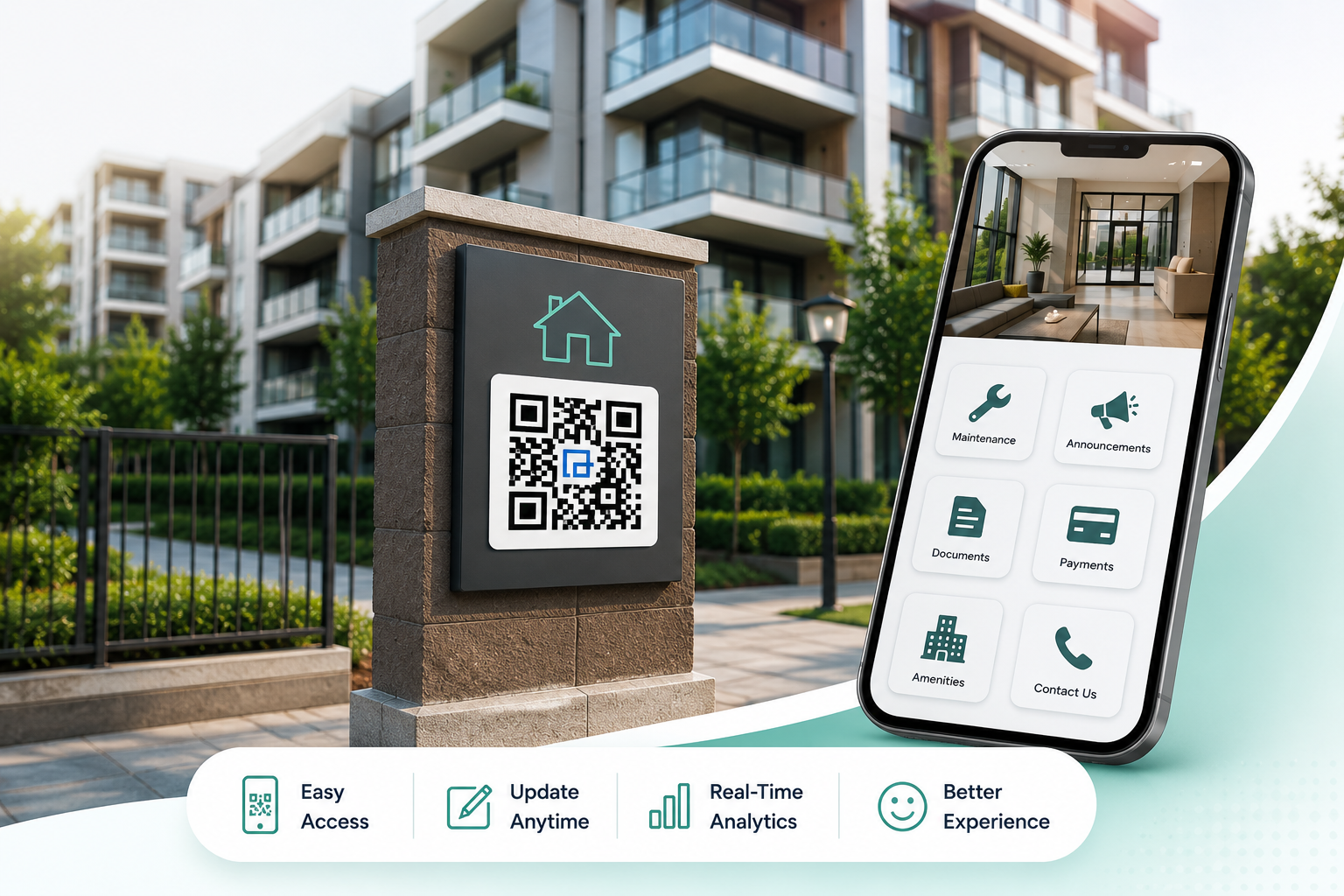
Property Management QR Codes connect physical spaces to online resources. Use them to streamline maintenance, modernize tenant communication, and provide instant property information. This guide covers exactly how to implement QR Codes to improve efficiency and elevate the resident experience.
What is a property management QR code? A property management QR code is a scannable barcode that allows tenants and visitors to instantly access resident portals, submit maintenance requests, view property listings, and read building rules directly from their smartphones.
Key Insight
QR codes in property management remove friction from daily operations. They replace printed packets, physical forms, and cumbersome manual data entry with instant, scannable digital experiences that tenants and visitors appreciate.
Benefits of Property Management QR Codes
According to recent industry reports by organizations like the National Multifamily Housing Council (NMHC), modern renters increasingly expect digital-first experiences. Transitioning from traditional printed materials to QR Code-based digital resources provides immediate, tangible benefits for property managers, leasing agents, and residents.
Faster tenant communication: Instantly direct residents to important community updates without waiting for email opens or mailing letters.
Simplified maintenance requests: Allow tenants to report issues right from their smartphones by scanning a code in their unit or common area, skipping phone calls and emails.
Better resident experience: Create a modern, tech-forward living environment where answers and resources are always just a scan away.
Digital move-in resources: Eliminate bulky, expensive printed welcome packets in favor of a single QR Code linking to a comprehensive digital portal.
Easier visitor information: Provide guests with instant access to parking rules, building directories, and Wi-Fi access in the lobby.
Reduced paperwork: Move forms, lease documents, and surveys online, cutting down on printing costs and physical storage needs.
Faster access to building information: Emergency protocols, amenity hours, and trash disposal rules are accessible 24/7 without staff intervention.
Improved operational efficiency: Your property management team spends less time answering routine questions and processing paper forms, freeing them up for higher-value tasks.
How to Implement QR Codes in Property Management
Implementing QR Codes successfully requires a strategic approach. Follow this practical implementation guide to ensure a smooth rollout across your properties.
Identify tenant touchpoints: Map out the physical locations where tenants and visitors naturally pause or need information, such as the lobby, elevators, mailrooms, and amenity spaces.
Choose the correct QR Code type: Match the QR Code to the goal. Use a Website QR Code for the resident portal, a PDF QR Code for building rules, and a Form QR Code for maintenance requests.
Create digital property resources: Before printing any codes, ensure the digital destinations (landing pages, forms, PDFs) are mobile-optimized, accurate, and ready for traffic.
Customize QR branding: Use a professional QR Code generator like QRTRAC to add your property management company's logo, adjust colors to match your brand, and use custom domains for trusted links.
Test the tenant experience: Scan every generated QR Code with both iOS and Android devices to ensure the destination loads quickly and functions perfectly on mobile.
Place QR Codes throughout the property: Print the codes on durable materials (like acrylic or metal for outdoor use, and high-quality vinyl for indoors) and install them at eye level with clear calls-to-action.
Train property management staff: Ensure your on-site team, leasing agents, and maintenance crew know how the QR Codes work, what they link to, and how to help residents use them.
Launch resident resources: Announce the new QR Code system to existing tenants via email, newsletters, or physical notices to drive awareness and adoption.
Monitor engagement: Check scan analytics regularly to see which resources are used most frequently and which locations get the most traffic.
Update destinations using Dynamic QR Codes: As community rules change or portals update, simply change the destination URL in your QRTRAC dashboard without replacing the physical signs.
Property Management QR Code Use Cases
Explore the most impactful ways to deploy QR Codes across residential and commercial properties.
Property Listings
Business challenge: Passersby see a "For Rent" sign but cannot easily view floor plans, pricing, or unit availability without calling the leasing office during business hours.
How QR Codes solve the challenge: A QR Code on the physical sign instantly links the prospect to the specific property listing on your website.
Implementation process: Generate a Dynamic Website QR Code linking to the unit's listing page. Print it on a high-visibility outdoor yard sign or window cling.
Benefits: Captures high-intent leads 24/7, provides instant gratification for prospects, and reduces phone inquiries for unavailable units.
Business challenge: Coordinating self-guided tours requires complex instructions, and prospects often get lost or forget the details of the amenities they viewed.
How QR Codes solve the challenge: QR Codes placed outside the unit and at key amenities provide instant access to digital brochures, virtual tours, and application links.
Implementation process: Place a QR Code on the model unit door linking to an interactive floor plan, and another in the kitchen highlighting appliance specifications.
Benefits: Enables simple self-guided tours, provides immediate answers to prospect questions, and bridges the gap between physical viewing and digital application.
Business challenge: Printing welcome packets for every new tenant is expensive, bad for the environment, and the information quickly becomes outdated.
How QR Codes solve the challenge: A single QR Code placed on the kitchen counter or inside the welcoming folder links to a comprehensive digital move-in hub.
Implementation process: Compile all move-in documents, neighborhood guides, and utility setup instructions into a single mobile-friendly page or PDF. Link a Dynamic QR Code to this resource.
Benefits: Zero printing costs, guaranteed up-to-date information, and an impressive, modern onboarding experience for new residents.
Business challenge: Tenants struggle to find the right phone number or email to report issues, leading to delayed reporting of property damage.
How QR Codes solve the challenge: Placing a "Scan for Maintenance" QR Code inside utility closets or on the fridge magnet allows instant form access.
Implementation process: Link a QR Code directly to your property management software's maintenance request portal (such as AppFolio, Yardi, or RealPage) or a customized digital form.
Benefits: Faster reporting of leaks and damages, streamlined ticketing for maintenance teams, and improved tenant satisfaction.
Business challenge: Residents forget the URL to the resident portal to pay rent, leading to late payments and increased administrative follow-ups.
How QR Codes solve the challenge: Placing QR Codes in the mailroom or on rent reminder notices provides a direct, one-tap route to the payment gateway.
Implementation process: Generate a QR Code linking specifically to the login page of your resident portal. Include clear "Scan to Pay Rent" instructions.
Benefits: Higher percentage of on-time digital rent payments, fewer password reset requests for staff, and increased portal adoption.
Business challenge: Rules, hours of operation, and reservation systems for the pool, gym, or clubhouse frequently change, leading to resident confusion.
How QR Codes solve the challenge: A QR Code at the entrance of each amenity links to the current rules and booking system.
Implementation process: Install permanent signage outside the gym or pool with a Dynamic QR Code. Update the destination link whenever hours or rules change.
Benefits: Eliminates the need to reprint physical signage, ensures residents always see the most current rules, and streamlines amenity reservations.
Business challenge: Paper notices in elevators or lobbies are often ignored, torn down, or quickly become outdated.
How QR Codes solve the challenge: A dedicated "Community Board" QR Code links residents to a live digital bulletin board with current events and notices.
Implementation process: Place a beautifully designed QR Code placard in elevators. Update the linked digital page weekly with news, events, and maintenance schedules.
Benefits: Keeps the lobby looking clean and professional, ensures residents get real-time updates, and tracks how many people are actually viewing announcements.
Business challenge: During an after-hours emergency (like a burst pipe), tenants panic when they cannot quickly find the emergency maintenance number.
How QR Codes solve the challenge: A high-visibility "Emergency Contact" QR Code placed inside the unit saves critical time.
Implementation process: Provide tenants with a fridge magnet featuring a QR Code that automatically dials the emergency maintenance line or opens an email.
Benefits: Reduces property damage by speeding up response times and provides peace of mind to residents.
Delivers a redeemable discount code or offer on scan.
Leasing flyers, referral cards, renewal notices.
Best Places to Use QR Codes in Residential and Commercial Properties
Placement is critical to QR Code success. When residents and visitors encounter QR Codes at the exact moment they need information, adoption skyrockets.
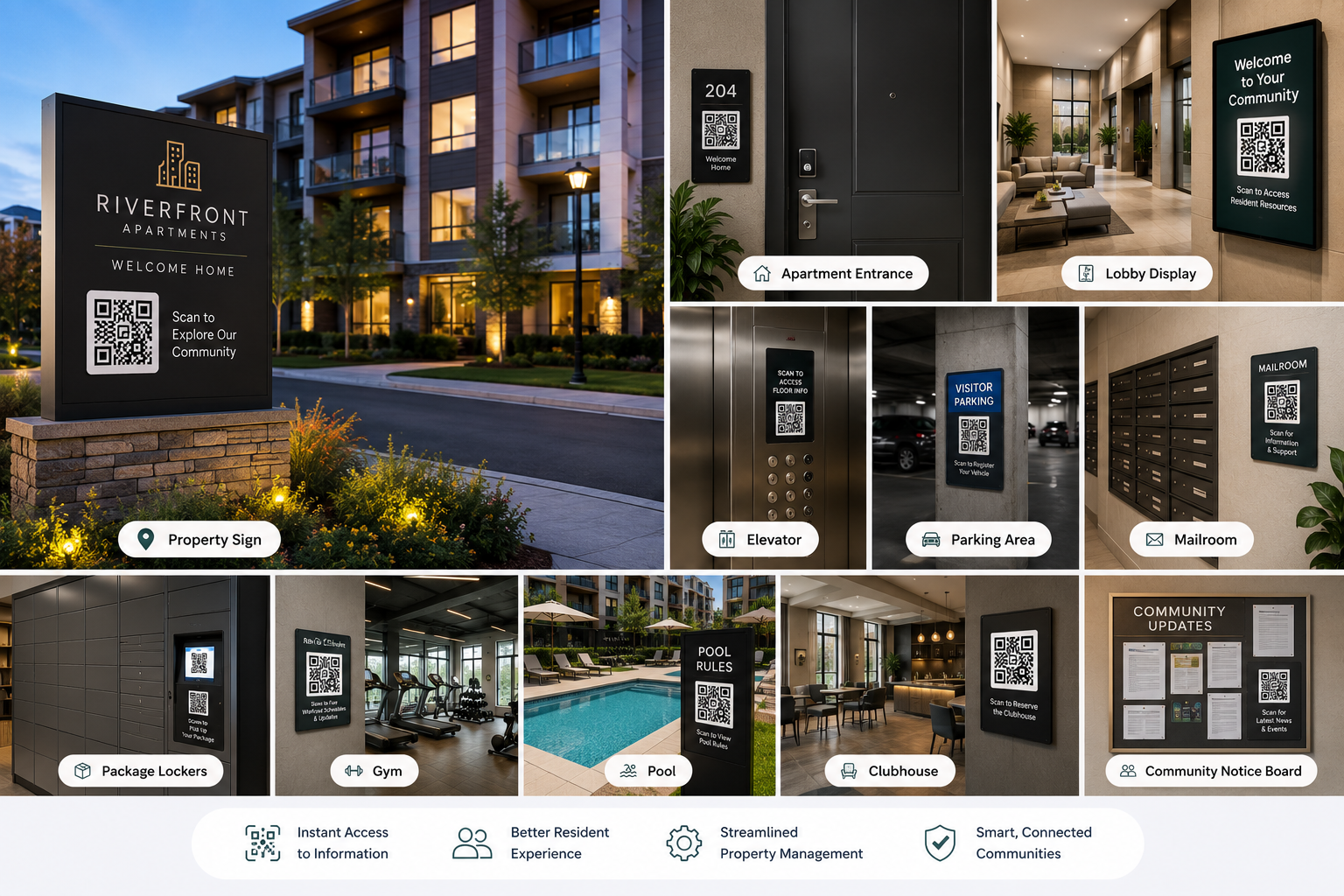
Property entrance: Allow prospects to view floor plans or visitors to access a digital directory before they even enter the building.
Apartment doors: Perfect for vacant units, allowing self-guided tours to easily access unit specifications and application links.
Lobby: A central hub for community announcements, visitor registration, and building maps.
Reception desk: Give guests a quick way to sign in or leave reviews without waiting for front desk staff.
Elevators: Captive audiences in elevators are highly likely to scan codes for community newsletters, event RSVPs, or maintenance notices.
Notice boards: Replace cluttered paper flyers with clean QR Codes linking to detailed digital documents.
Parking areas: Clarify visitor parking rules, registration forms, and towing policies exactly where cars are parked.
Mailroom: A high-traffic area perfect for resident portal links, rent payment reminders, and community updates.
Package lockers: Provide instant access to instructions, courier contact info, or locker support.
Gym & Pool: Link to rules, waiver forms, hours of operation, and equipment tutorials.
Clubhouse: Facilitate room reservation systems and Wi-Fi access codes for guests.
Maintenance rooms: Allow staff or contractors to scan equipment for manuals, service logs, and safety protocols.
Property signs: Turn static "For Rent" signs into interactive lead generation tools.
Rental brochures: Bridge physical marketing materials to virtual tours and online applications.
How QR Codes Improve the Tenant Journey
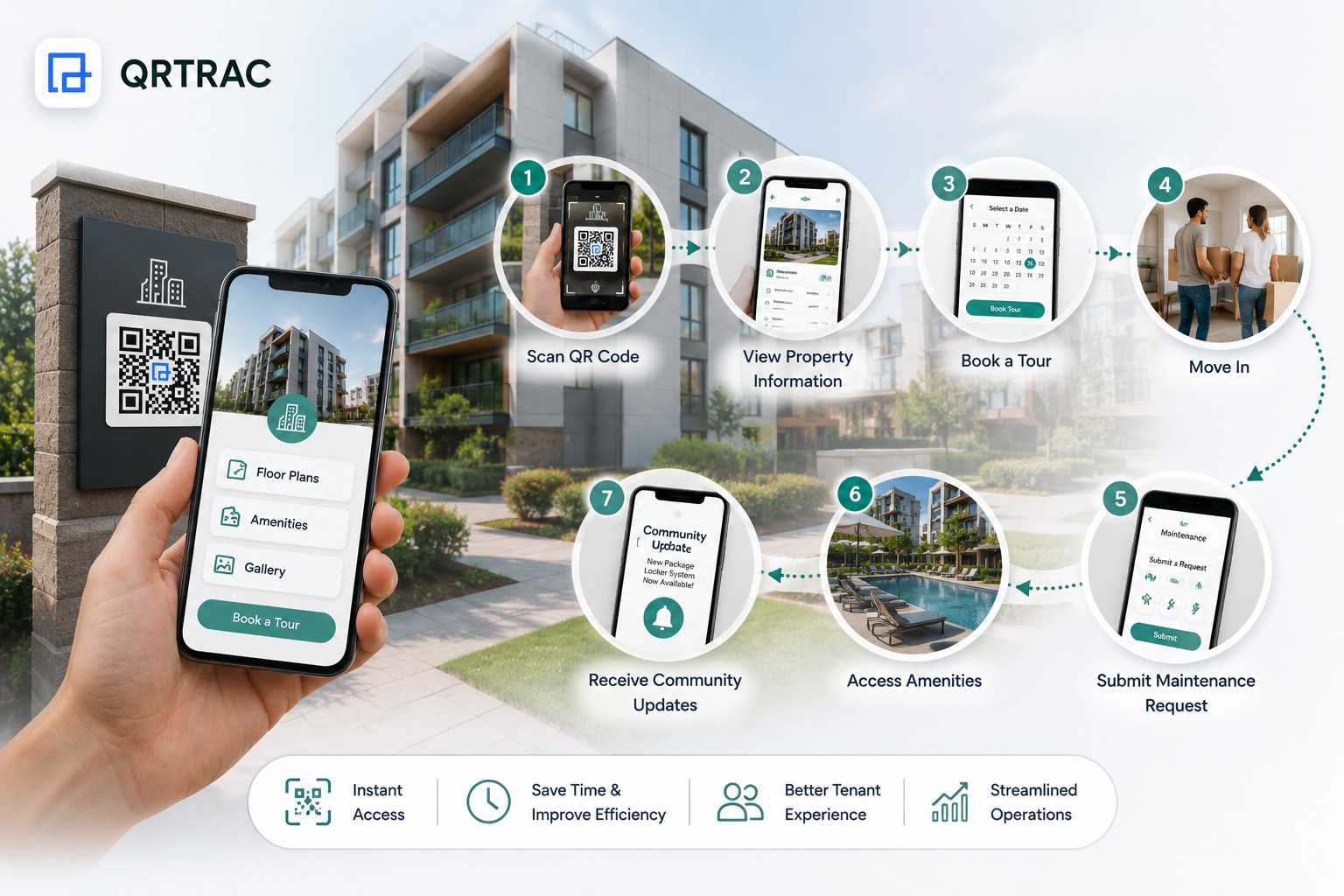
A superior tenant experience relies on removing friction at every stage of the rental lifecycle. Here is how QR Codes simplify the complete tenant journey:
Discover property: A prospect walking by scans a sign, instantly viewing pricing and availability without needing to call.
Schedule a tour: The mobile landing page features a direct link to a calendar booking system, capturing the lead immediately.
Visit the property: During a self-guided tour, QR Codes placed in the unit explain premium features (e.g., smart home tech) and provide a digital brochure.
Apply for rental: The prospect scans a code on the leasing desk to pull up the digital application on their phone.
Move in: The new tenant receives a welcome folder with a single QR Code linking to a move-in checklist, utility setup guide, and digital key instructions.
Access community resources: The tenant scans the elevator QR Code to RSVP for a community event and the gym QR Code to review hours.
Request maintenance: When the sink leaks, the tenant scans the magnet on the fridge to submit a ticket in under 60 seconds.
Renew lease: A QR Code on the renewal notice links straight to the digital signature platform, securing the renewal effortlessly.
Simplifying Maintenance and Resident Services with QR Codes
Operational efficiency in property management relies heavily on smooth maintenance workflows and accessible resident services.
Instead of requiring residents to use complex portals on desktop computers, QR Codes bring services directly to their smartphones. Implement a centralized "Resident Hub" QR Code provided upon move-in that links to:
Maintenance request forms: Pre-fill location data if the QR Code is specific to a unit or common area.
Emergency contacts: Immediate access to after-hours numbers, security, and local authorities.
Building rules: Digital, searchable PDFs of noise policies, pet rules, and smoking guidelines.
Move-in guides: Step-by-step instructions for setting up internet, electricity, and water.
Parking instructions: Clear guidelines on resident spots vs. visitor spots to avoid towing.
Waste disposal information: Schedules for trash pickup, recycling rules, and bulky item disposal instructions.
Resident portal: Direct login for rent payments and ledger reviews.
Community documents: Access to HOA rules, lease addendums, and insurance requirements.
Expert Tip
For large properties, use unique maintenance QR Codes in specific zones (e.g., "Gym AC unit" or "Elevator 3"). When scanned, the maintenance form can auto-populate the location, ensuring your team knows exactly where the issue is.
Improving Visitor and Community Communication
A well-managed property extends its digital experience to guests and the broader community, ensuring safety and clear communication.
Visitor parking: Prevent disputes by placing QR Codes on parking signs that link to digital registration forms, allowing guests to register their license plates instantly.
Guest instructions: Lobby QR Codes can provide guests with maps to specific towers, amenities, or delivery drop-off zones.
Community announcements: Replace paper flyers in elevators with a dynamic QR Code linking to a live digital bulletin board that management can update from anywhere.
Event registration: Increase turnout for community BBQs or holiday parties by linking a QR Code to a quick RSVP form.
Building maps: Essential for sprawling garden-style complexes or multi-tower developments, helping guests find their way without bothering staff.
Facility information: Provide instant access to clubhouse rental rules, guest pass policies for the pool, and gym waivers.
Resident newsletters: Distribute monthly updates digitally, saving printing costs and tracking exactly how many residents read the news.
Dynamic vs Static QR Codes in Property Management
Understanding the difference between Static and Dynamic QR Codes is critical. For property management, Dynamic QR Codes are almost always the required choice due to the need for continuous updates and analytics.
Feature
Static QR Codes
Dynamic QR Codes (Recommended)
Editing
Cannot be edited. Must reprint physical signs if URL changes.
Destination URL can be updated instantly at any time.
Analytics
No tracking or scan data available.
Full analytics: scan counts, location, time, and device type.
Maintenance updates
If the maintenance software changes, the QR code breaks.
Easily point the existing QR code to the new software link.
Resident communication
Only links to one permanent message.
Link can be swapped weekly to point to the latest newsletter.
Scalability
Poor. High risk of broken links over time.
Excellent. Future-proofs your printed signage investments.
Branding
Basic customization.
Advanced customization with logos, brand colors, and custom domains.
A common question property managers ask is regarding the cost-effectiveness of implementing a QR Code system across their portfolio.
Low Entry Cost: Professional QR Code generators like QRTRAC offer affordable enterprise plans that scale with the number of properties you manage.
Print Savings: By eliminating physical welcome packets, lease renewals, and community newsletters, properties save thousands of dollars annually on paper and ink.
Time Savings: Automating maintenance requests and visitor parking via QR Codes reduces front desk labor hours, allowing staff to focus on leasing and retention.
High ROI: Capturing just one additional lease per month via a "For Rent" sign QR Code completely covers the annual cost of the platform.
Common Property Management QR Code Mistakes to Avoid
Even the best digital resources will fail if the physical implementation is flawed. Avoid these common pitfalls to ensure high adoption rates among your residents.
Poor placement: Placing a QR Code too high on a wall, behind reflective glass, or in dark, unlit areas makes it impossible to scan. Always test in the actual environment.
Broken links: A resident scanning a code to report an emergency and hitting a "404 Not Found" page destroys trust. Always double-check URLs.
Using Static QR Codes for frequently updated information: Printing a static QR code on expensive acrylic signage for amenity rules means the whole sign must be trashed if the rules change.
Ignoring mobile optimization: Linking a QR Code to a desktop-only property management portal that requires zooming and pinching will frustrate tenants. Landing pages must be mobile-first.
No clear CTA: A QR Code placed alone on a wall looks suspicious. Always include a Call To Action like "Scan to Submit Maintenance Request."
Poor printing quality: Blurry, pixelated, or excessively small QR Codes (under 1 inch) will not scan reliably on older smartphones.
Ignoring analytics: Failing to check scan data means you miss out on understanding which amenities are popular or where communication is breaking down.
Not testing resident experience: Property managers must walk the property and physically scan every code themselves to ensure the digital journey makes sense.
Best Practices for Property Management QR Codes
Follow this checklist to create professional, highly effective QR campaigns across your portfolio.
Clear CTAs: Always surround the QR Code with context. (e.g., "Scan to view move-in guide").
Professional branding: Add your property management company's logo to the center of the code and match the colors to your building's aesthetic.
High-quality printing: Use durable materials. For outdoors, use metal, acrylic, or weather-resistant vinyl. Ensure high contrast (dark code, light background).
Mobile-friendly landing pages: Ensure every destination page loads in under 3 seconds and is perfectly formatted for smartphone screens.
Dynamic QR Codes: Exclusively use Dynamic QR Codes for anything printed on permanent or semi-permanent materials to allow for future updates.
Regular testing: Audit your QR Codes monthly to ensure the links are still active and pointing to the correct software or portals.
Routine updates: Refresh the content behind your "Community Bulletin" QR Codes frequently so residents know it's a reliable source of current news.
Analytics monitoring: Use QRTRAC to track scans. If an important document isn't getting scans, consider moving the physical QR Code to a more visible location.
Resident-focused content: Ensure the linked content actually solves a problem or answers a question quickly, without unnecessary marketing fluff.
Staff awareness: Your leasing agents and maintenance teams are your ambassadors. They must know exactly how to guide a resident to use the QR Codes.
Measuring Property Management QR Code Performance
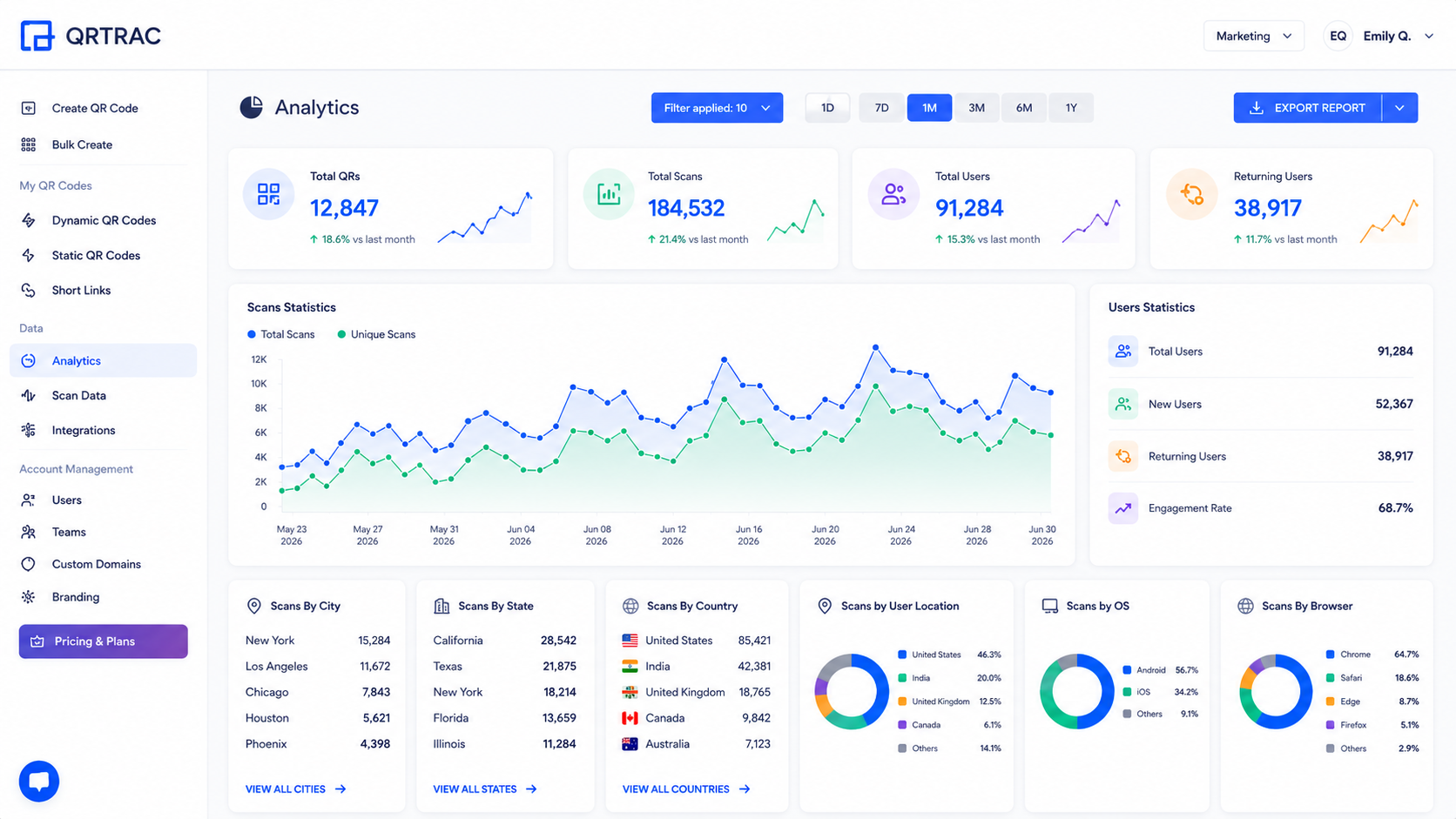
QRTRAC provides property managers with enterprise-grade analytics to measure engagement and operational efficiency. By tracking scan data, you can make informed decisions about your property.
Property listing scans: Measure exactly how much foot traffic your physical "For Rent" signs are converting into digital views.
Tour requests: Track which QR Codes (e.g., the one on the brochure vs. the one on the window) generate the most self-guided tour bookings.
Maintenance form submissions: Monitor the volume of scans in specific areas to identify recurring maintenance issues (e.g., a specific laundry room code scanned frequently indicates faulty machines).
Resident engagement: See how many tenants actually scan the community newsletter code in the elevator.
Amenity usage: Track scans at the gym or pool to understand peak usage times and justify amenity budget allocations.
Device types: Ensure your digital portals are optimized for the operating systems your residents actually use (iOS vs Android).
Peak scan times: Understand when your residents are most active, allowing you to time important announcements perfectly.
Community interactions: Measure the success of community events by tracking RSVP QR Code scans.
Property Management QR Code Deployment Checklist
Before launching your new digital infrastructure, run through this final checklist to ensure a flawless tenant experience.
✔QR Codes tested: Scanned on both iOS and Android devices in their final physical locations.
✔Property information verified: Destination links contain accurate, up-to-date information.
✔Mobile compatibility confirmed: Landing pages, forms, and PDFs display perfectly on mobile screens.
✔Resident resources updated: Welcome packets, newsletters, and emails instruct residents on how to use the new system.
✔Staff trained: Leasing and maintenance teams understand the workflows and can assist residents.
✔Analytics enabled: QRTRAC tracking is active to monitor engagement from day one.
✔Backup URLs available: Alternative links are prepared in case primary property management software experiences downtime.
✔Visitor instructions added: Clear signage is in place for non-residents (parking, directories, lobby access).
✔Printed materials reviewed: Signage has high contrast, clear calls-to-action, and is printed on durable materials.
Frequently Asked Questions
Can property managers update QR Codes after printing?
Yes, if you use Dynamic QR Codes. A Dynamic QR Code allows you to change the destination URL in your dashboard at any time without having to reprint or replace the physical signage on your property.
Which QR Code type is best for apartment communities?
Dynamic Website URL QR Codes are the most versatile for linking to resident portals and maintenance forms. Multi-Link QR Codes are excellent for lobbies to provide a centralized hub for community announcements, maps, and events.
Can QR Codes simplify maintenance requests?
Absolutely. By placing a QR Code inside the apartment (e.g., on a utility closet or fridge magnet), tenants can instantly scan and open a mobile-friendly maintenance request form, bypassing phone calls and emails entirely.
How can QR Codes improve resident communication?
They replace static paper flyers with instant access to dynamic digital information. Scanning a code in the elevator can instantly add a community event to a resident's phone calendar or display the latest community newsletter.
Where should apartment buildings place QR Codes?
High-traffic areas and points of friction are best. Strategic locations include the main entrance, lobby desk, mailroom, package lockers, elevators, parking lot signs, gym/pool entrances, and inside individual units for maintenance access.
Can QR Codes help with property tours?
Yes, QR Codes are essential for self-guided tours. Prospects can scan codes outside the building to schedule a viewing, and scan codes inside the model unit to view digital brochures, floor plans, and rental applications instantly.
Can QR Codes reduce printed materials?
Significantly. Property managers can replace massive, expensive printed move-in packets, amenity rule books, and community flyers with a few strategically placed QR Codes, saving thousands of dollars in printing costs annually.
Conclusion
Implementing QR Codes in property management is no longer just a digital trend; it is a foundational operational strategy. By strategically placing QR Codes throughout your residential or commercial properties, you dramatically improve the resident experience, streamline tedious maintenance workflows, and modernize community communication.
From providing instant access to digital move-in resources to capturing deep analytics on amenity usage, Dynamic QR Codes empower property managers to run their buildings more efficiently. Following the best practices in this guide ensures that your physical signage remains future-proof, your links remain active, and your tenants remain highly engaged.
Ready to modernize your property management operations? Create professional, branded, and trackable Property Management QR Codes today using QRTRAC's advanced generation and analytics platform.
Modernize Your Property Management Today
Create powerful, trackable QR Code solutions for maintenance, resident portals, and property tours with QRTRAC.