Run your next festival without the headache of long lines and paper waste. Use dynamic QR codes to speed up check-ins, take mobile payments, and track crowd movement in real time.
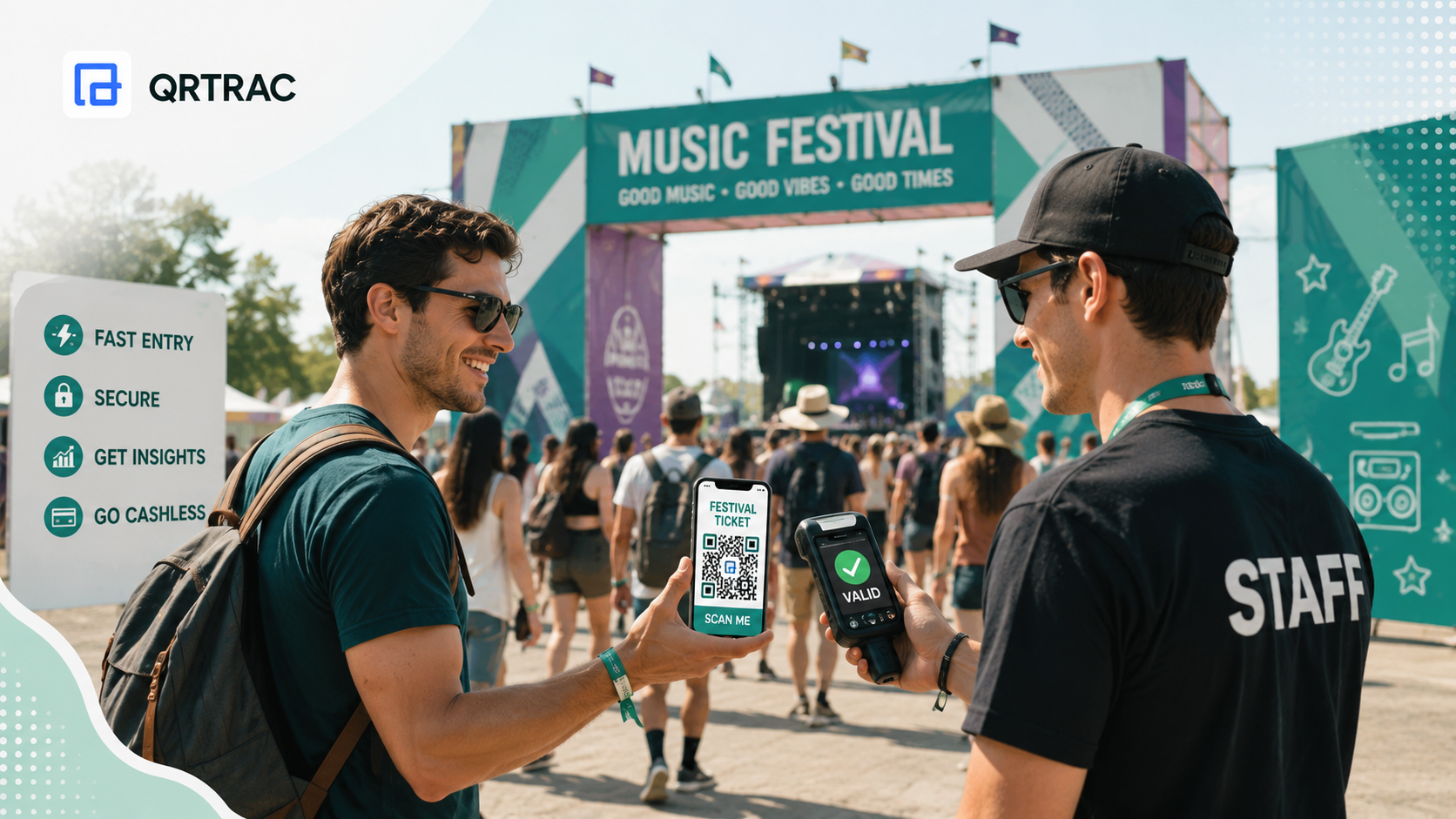
Attendees using QR code ticketing for faster festival entry
Attendees using QR code ticketing for faster festival entry
What is a QR Code for Festivals?
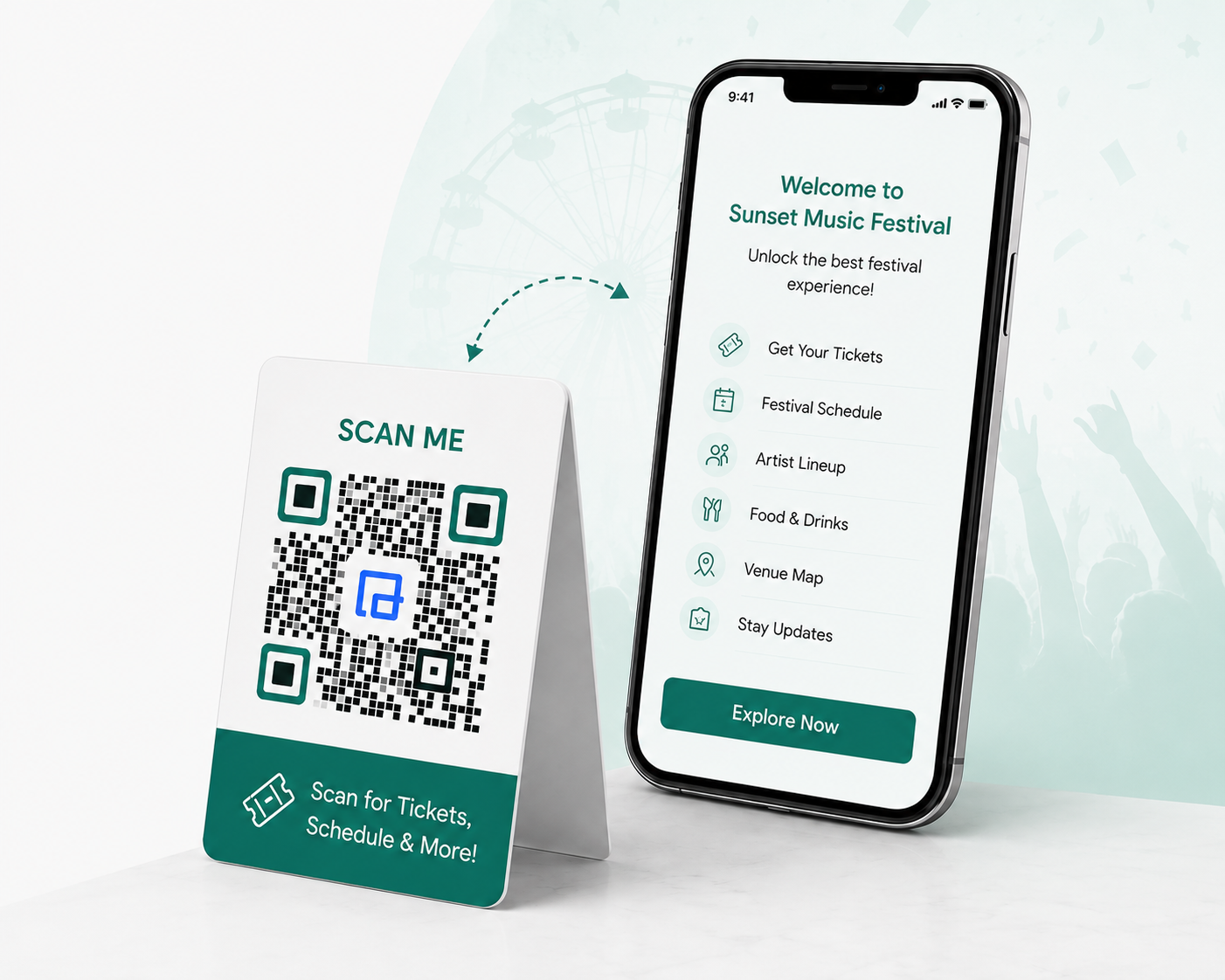
A festival QR code is a digital barcode that connects attendees to tickets, food vendor menus, and interactive venue maps. Dynamic QR codes let you change schedule times or gate assignments instantly without reprinting signs, while tracking scan data to see where crowds gather.
Key Takeaways
Operational Efficiency: Speeds up gate check-ins by 40%.
Cashless Payments: Lets attendees buy drinks and merch with a quick phone scan.
Instant Updates: Edit maps and schedules on the fly without reprinting posters.
Crowd Tracking: See which stages draw the biggest crowds in real time.
Introduction
Running a festival is chaotic. You coordinate hundreds of staff, vendors, and thousands of eager fans. How do the best events handle massive crowds without endless, slow-moving queues?
They don't use old-school paper checklists. They run on smart digital flows. In this guide, we'll show you how dynamic QR codes keep your event moving. You will learn to deploy scan-to-pay food lanes, live artist schedules, and interactive maps that work directly inside a standard phone browser.
Quick Facts
✓QR code ticketing is now the default for most large festivals, replacing paper tickets and manual gate checks
✓Scanning a QR code is faster than a staff member manually checking a paper ticket or wristband against a list
✓Cashless and contactless tools at festivals have grown steadily since 2020, driven partly by hygiene concerns and partly by faster lines
Why Modern Festivals Need QR Codes
Paper tickets and physical tokens are dead weight. They get lost, copied, and slow down your lines. Today, attendees expect everything to live on their smartphones. They want to scan a screen, walk past the gates, and pay for a beer with a tap. If your systems are slow, your fans get frustrated.
Setting up a solid QR network fixes your biggest headaches. It stops ticket fraud, breaks up bottlenecked gates, and saves your budget from useless printing runs. When you use dynamic codes, every smartphone becomes a direct link to your main stage. You can send updates to lost fans and track exactly which areas get too crowded.
Sustainability
Eliminates millions of single-use printed tickets, schedules, and lanyards, significantly reducing the event's carbon footprint.
Accessibility
Allows instant translation of event maps and schedules directly on the user's personal device.
Safety
Provides immediate access to emergency evacuation routes and digital medical check-in stations.
Festival Industry Statistics & Trends
The shift toward digital operations is clear. Look at the numbers driving the modern festival environment:
What Changes
Why
Digital ticketing
A phone can't be left at home the way a paper ticket can, and a lost phone is rarer than a lost ticket. That alone cuts a steady source of will-call lines.
Cashless, QR-based payments
Tapping or scanning to pay is faster than counting cash at a crowded merch tent, so vendors clear more transactions per hour during peak rushes.
QR entry scanning
A scan takes a second; manually checking a paper ticket or wristband against a list takes longer and doesn't scale at 10,000+ attendees.
How QR Codes Transform the Festival Experience
From the moment an attendee buys a ticket to the final encore, QR codes bridge the gap between physical festival grounds and real-time digital schedules. Placing them in the right spots keeps your fans happy and your gates moving.
1. Contactless Ticketing and Entry
Huge entrance lines ruin the vibe before the music even starts. Send tickets out as Bulk QR Codes straight to mobile wallets. Your gate crew can scan hundreds of attendees per minute with a standard smartphone or scanner.
Prevents ticket fraud with dynamic validation
Enables real-time entry tracking and crowd management
Integrates directly with event management platforms
QR code scanning at festival entry gates reduces average wait time from 45 to 15 minutes
Dynamic vs. Static QR Codes for Festivals
When planning your layouts, choose dynamic codes. For live events, dynamic codes are the only smart option.
Feature
Static QR Codes
Dynamic QR Codes (Recommended)
Editability
Permanent. Cannot be changed once printed.
Fully editable. Change the URL destination anytime.
Analytics & Tracking
No tracking capabilities.
Tracks scans, locations, devices, and peak scan times.
Best Used For
One-off Wi-Fi access or simple vCards.
Ticketing, live schedules, interactive maps, and vendor menus.
Expert Tip: The "URL Redirect" Failsafe
Never print a static QR code on a physical sign. If your map server crashes on opening day, that static code is dead. With a dynamic code, you can log in, paste a backup Google Drive link, and redirect all 50,000 attendees in 10 seconds.
Festival QR Code Solutions Comparison
When selecting an event platform, look at how the options stack up for field performance.
Feature
Generic QR Tools
Event Platforms (Eventbrite)
QRTRAC (Recommended)
Real-Time Analytics
❌ No
⚠️ Limited
✓ Advanced crowd heatmaps & traffic tracking
Cashless Payment Integration
❌ No
✓ Built-in
✓ Multiple payment gateways supported
Ticketing + Event Management
❌ No
✓ Full platform
✓ Specialized for festivals + flexible
Customizable Branding
✓ Basic
⚠️ Limited
✓ Full brand customization + white-label
Dedicated Event Support
❌ No
✓ Yes
✓ 24/7 festival operations support
Why Festival Organizers Choose QRTRAC
⚡
Built for Field Operations
We built QRTRAC to handle complex, multi-day outdoor events. It scales to handle thousands of concurrent scans even when cell towers are overloaded.
📊
Real-Time Analytics & Crowd Intelligence
Live heatmaps show exactly where attendees are, which stages are drawing crowds, and where bottlenecks form—allowing you to optimize operations in real-time.
🛟
24/7 Festival Operations Support
Our dedicated event support team is available 24/7 during your festival week to handle any issues immediately—not a chatbot, real experts.
2. Cashless Payments & Merchandise
Cash slows down lines. Spottier card terminals drop connections in deep fields. QR payment portals bypass this friction. Attendees scan a sign at your food truck, pull up the menu, and pay with Apple Pay. Transactions take seconds, and your lines keep moving.
💡 Pro Tip: Link merchandise QR codes to an online store where attendees can buy items and have them shipped home, reducing the burden of carrying gear around the festival.
Festival Impact Metrics
Scan Velocity
A QR scan at the gate is faster than a staff member checking a paper ticket or wristband by hand.
Engagement
Attendees scan codes for schedules and maps instead of hunting for a staffed info booth.
Sales Boost
Frictionless, scan-to-pay checkout lets vendors clear more sales during a rush than counting cash.
3. Dynamic Schedules & Interactive Maps
If your headliner gets stuck at the airport, you can't reprint 10,000 booklets. A dynamic URL QR code printed on physical totems lets you redirect fans to a live, web-based schedule. If a stage moves or a set gets delayed, you update the webpage, and every attendee sees the new schedule instantly.
Festival Planning Workflow with QR Codes
Integrating QR codes into your event lifecycle requires strategic timing. Here is the definitive roadmap for deploying digital assets from conception to the final encore using a comprehensive festival QR code platform.
1
Phase 1: Planning & Promotion
Put trackable QR codes on posters and flyers. Drive early-bird ticket sales and track exactly which poster location brings in the most signups.
2
Phase 2: Ticketing & Fulfillment
Create unique check-in codes for every buyer. Send them straight to email or mobile wallets.
3
Phase 3: Event Execution & Engagement
Stick dynamic codes on signs throughout the venue. Use them for stage schedules, food truck menus, and VIP ticket upgrades.
4
Phase 4: Post-Event Analytics
Look at your scan logs. See which gates bottlenecked, when crowds peaked, and which sponsor booths got the most action. Use this data to negotiate better vendor rates next year.
Recommended Implementation Timeline
6 Months Out
Ticketing Integration
Sync QR API with your sales platforms. Generate dynamic entry codes.
3 Months Out
Marketing Rollout
Embed tracking QR codes on physical billboards and promotional flyers.
1 Month Out
Vendor Setup
Generate cashless payment and menu codes for all food/merch partners.
Event Week
Signage Printing
Print dynamic codes on physical totems for maps and schedules.
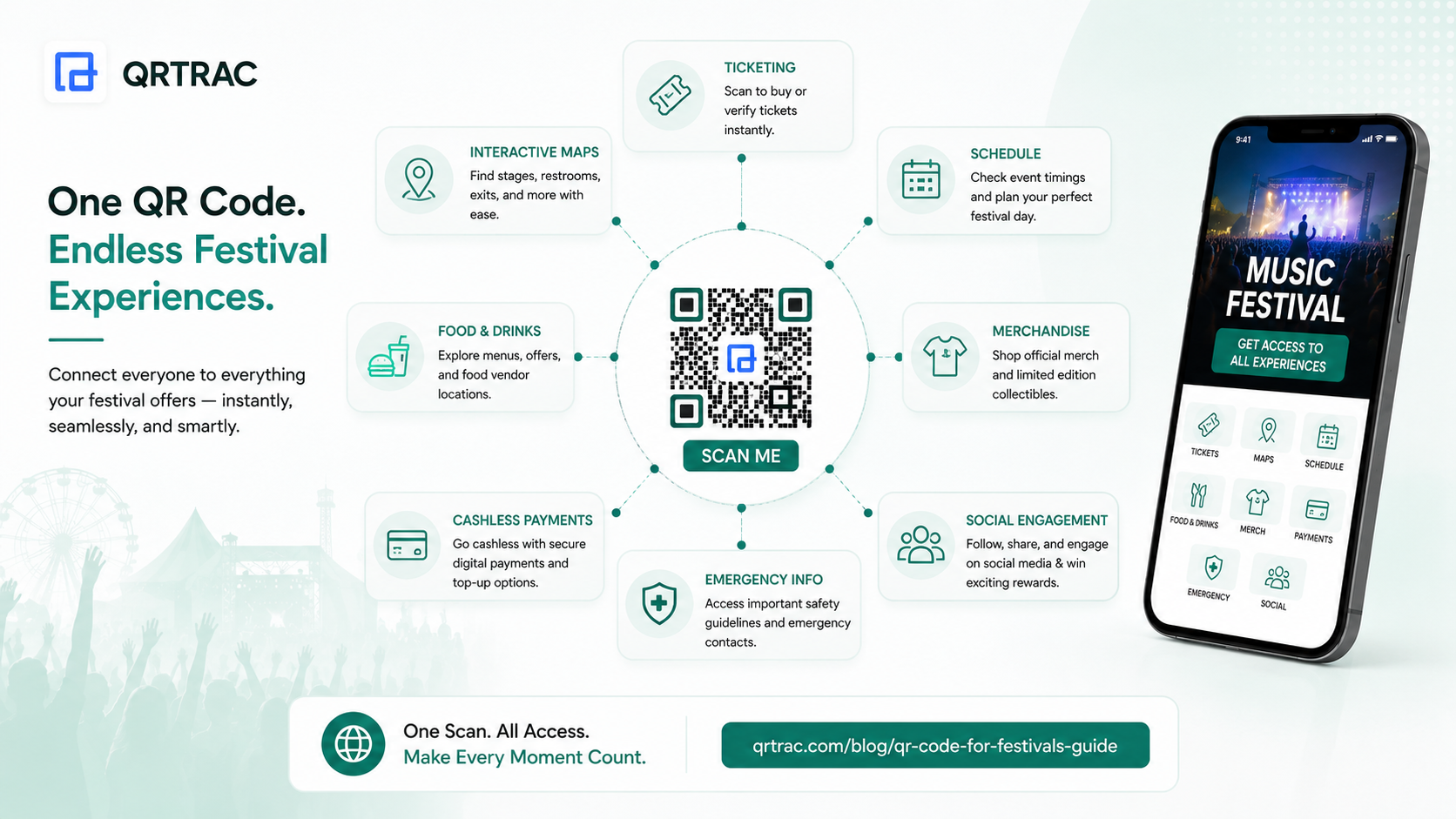
Integrated festival QR code ecosystem connecting ticketing, payments, maps, and analytics into a unified experience
High-Impact QR Code Placement Ideas
Visibility is the key to scan velocity. If attendees can't see the code, they won't use it. Here are the most effective physical locations to place codes at your event:
Entry Gates: Rapid check-in and digital waivers.
Ticket Booths: Instant box-office upgrades and add-ons.
Stage Areas: Artist bios and real-time set changes.
Food Courts: Contactless menus and ordering systems.
Merchandise: Digital storefronts for bulky items.
VIP Areas: Exclusive content and concierge services.
Parking: Pin-drop locations and pre-paid exit passes.
Restrooms: Cleaning schedules or maintenance request pings.
Emergency Stations: Digital first-aid guides and contact info.
Shuttle Stops: Live bus tracking and transport schedules.
The Ultimate Festival Organizer Checklist
Common Mistakes to Avoid
Even the best-planned setups fail if basic scanner requirements are ignored. Avoid these common pitfalls to keep scans fast:
Poor Contrast
Dark codes on dark backgrounds fail. Stick to black-on-white or highly contrasting colors so cameras can read the pattern under direct sunlight.
Bad Placement
Don't hang codes on high rafters or ankle-level barricades. Place them at chest height so attendees can scan them without bending or stretching.
Desktop-Only Sites
Every single scan comes from a smartphone. If your schedule page looks broken on mobile, your code is useless.
No Breathing Room
Keep a clear border around the QR code. If graphics crowd the edges, phone cameras won't recognize the code.
Festival QR Code Security & Fraud Prevention
Scalpers and scammers drain your revenue. Standard PDF tickets are easy to copy and screenshot. To stop this, use secure, rotating QR codes that refresh every few seconds. If an attendee takes a screenshot to sell twice, the static image expires before they reach the gate. We also tokenized our checkout flows. This keeps financial data encrypted and secure at every food and merch stall.
Measurable Festival ROI & Operational Benefits
Using a dedicated event QR tool saves hard cash. You get measurable returns on your setup budget:
Save on Paper: Stop printing physical schedules, brochures, and food menus. You will save thousands on printing and cleanup.
Streamline Gate Staffing: Self-scan kiosks let you manage thousands of attendees with a fraction of the gate crew.
Sell Digital Sponsor Spots: Charge sponsors for logo placements on the mobile schedule pages that every fan checks.
Grow Your Email List: Collect opt-ins when fans scan to join the festival Wi-Fi or enter giveaways.
The challenge: A massive 3-day outdoor music festival can struggle with 2-hour entry lines, attendees who give up and leave, and merchandise sales that drop off because nobody wants to wait in another queue.
The fix: A unified crowd-flow plan: dynamic QR tickets for instant entry, QR-enabled navigation totems at intersections, and "Scan & Collect" codes at merch tents.
Why it works: Entry that doesn't require a physical scan-and-tear ticket moves faster, wayfinding codes cut the time attendees spend lost between stages, and letting people buy merch from their phone removes the queue that was costing those sales in the first place.
Enterprise-Grade Security & Compliance
🔒
GDPR Compliant
🛡️
256-bit Encryption
✓
TLS Secured
🌐
Reliable Redirects
All festival data is encrypted, backed up, and protected under international security standards. Your attendee information is safe.
Explore Related QRTRAC Solutions
Ready to expand your digital footprint? Beyond ticketing and maps, consider these integrated solutions to power up your next event:
QR codes are no longer just a novelty; they are a fundamental infrastructure piece for modern festivals. By smoothly blending physical spaces with digital experiences, organizers can drastically improve logistics, boost vendor sales, and deliver an unforgettable experience to every single attendee. Start planning your QR strategy today to keep your festival ahead of the curve with emerging festival technology trends.
Can we customize the QR codes to match our festival branding?
Absolutely. With a premium event management platform like QRTRAC, you are not limited to standard black-and-white squares. You can fully customize the colors to match your brand palette, directly embed your festival's logo or icon in the center of the code, and modify the eye shapes and data pattern styles. This ensures complete brand consistency across all digital and physical touchpoints throughout the festival grounds.
Are QR codes environmentally friendly for large-scale music festivals?
Yes, transitioning to a digital QR code setup is one of the most impactful steps a festival can take toward sustainability. Traditional festivals produce massive amounts of waste from printed paper tickets, lanyards, physical site maps, and vendor menus. By replacing these items with dynamic QR codes, organizers can prevent millions of pieces of single-use paper and plastic from entering landfills. It reduces both the carbon footprint of production and the logistical emissions of shipping physical materials.
How do we prevent ticket scalping with festival QR codes?
Ticket scalping and counterfeit fraud are effectively eliminated by using dynamic, time-based rotating QR codes. Unlike a static PDF ticket that can be screenshotted and sold multiple times, a secure digital ticket QR code refreshes its visual matrix every few seconds. If a user attempts to take a screenshot, that static image will be invalid by the time they reach the scanning gate. Gate scanners authenticate the live token embedded in the rotating code, ensuring only the true ticket holder gains entry.
Can festival QR codes be integrated with RFID wristband systems?
Yes, many large-scale festivals run a hybrid ecosystem. A digital festival check-in QR code is initially used at the outer gates for rapid authentication. Once inside, attendees can link their QR profile to an RFID or NFC wristband for frictionless payments in crowded areas where pulling out a smartphone might be inconvenient. The QR code acts as the digital bridge connecting the attendee’s online profile and payment methods directly to the physical wristband hardware.
What data analytics can organizers gather from event QR codes?
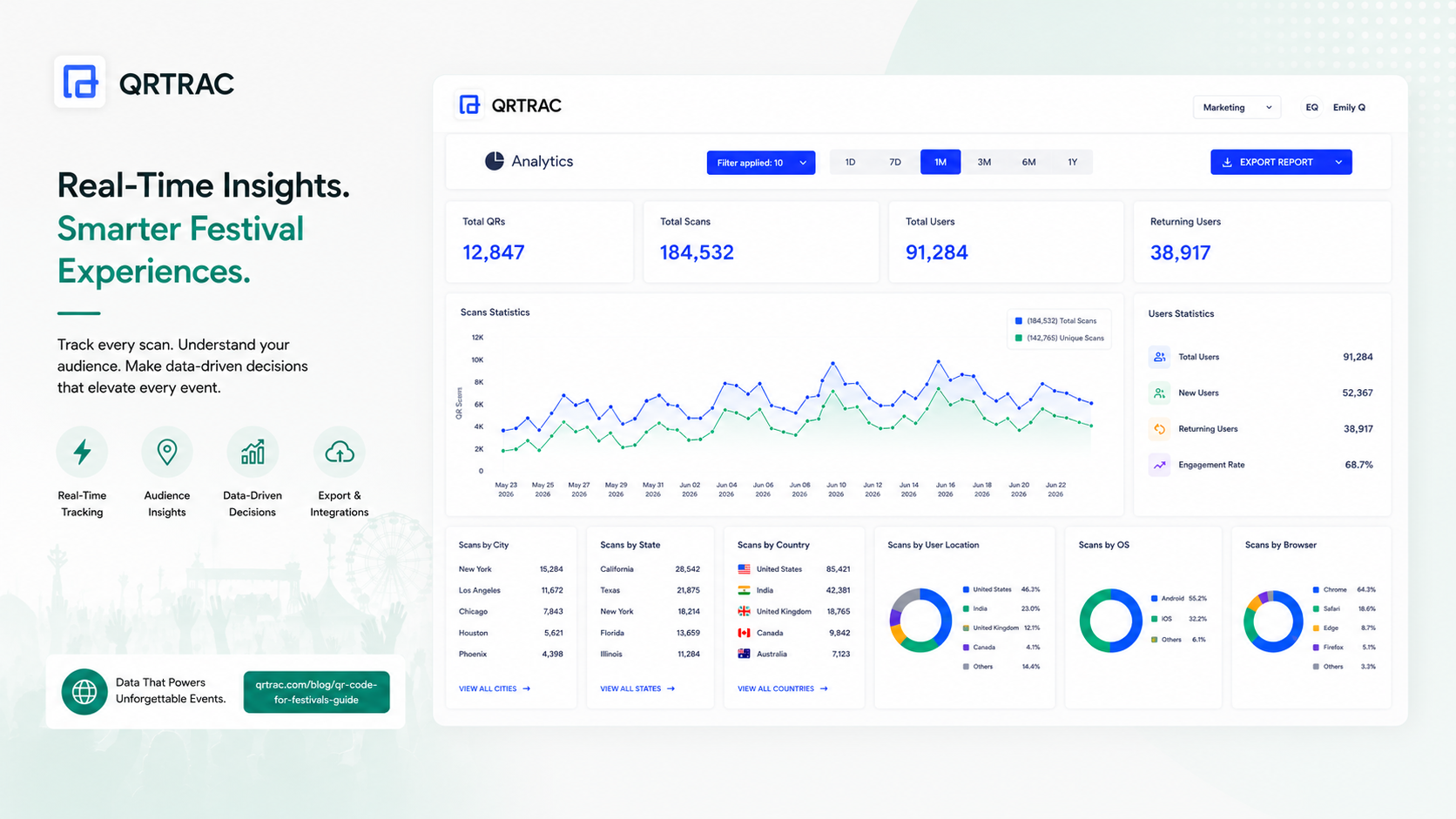
Dynamic QR codes provide unprecedented visibility into crowd behavior. Organizers can track exactly when and where a code is scanned, the type of device used, and the total volume of scans over time. This allows you to generate heatmaps showing which stages or vendor areas are drawing the most foot traffic. You can also analyze peak entry times to optimize staff deployment at gates, or determine which physical advertising placements (like a billboard vs. a flyer) drove the highest engagement.
How do QR codes improve emergency response times at festivals?
Safety is a top priority at mass gatherings. Placing high-visibility "Emergency Assistance" QR codes throughout the festival grounds allows attendees to instantly ping medical or security teams with their precise GPS location. Scanning the code can also instantly redirect the user’s phone to a digital map highlighting the fastest evacuation routes, the locations of the nearest first-aid tents, and live safety broadcast messages from the organizers during severe weather events.
Do we need specialized hardware to scan dynamic festival QR codes?
It depends on the scale of your operation. For vendor payments, schedule checks, and map downloads, attendees use their own standard smartphone cameras—no specialized hardware is required. However, for high-velocity entry gates processing thousands of people per hour, we strongly recommend deploying dedicated laser-based QR scanners or specialized rugged PDAs. These hardware scanners process barcodes in milliseconds, vastly outperforming a staff member trying to scan tickets using a standard smartphone app.
Can attendees use QR codes to order food directly to VIP areas?
Absolutely. In premium VIP cabanas or designated seating areas, organizers often place table-specific QR codes. When scanned, the code opens a localized digital menu where the attendee can order drinks or food and pay directly via Apple Pay or Google Pay. Because the specific QR code is hardcoded to that exact table or cabana location, the hospitality runners know precisely where to deliver the order without the attendee ever having to wait in a physical line.
What is the difference between an event registration QR code and a festival check-in QR code?
An event registration QR code is typically used during the promotional phase before the event. It is placed on marketing materials (flyers, social media) to drive potential attendees to a ticketing page where they can purchase passes or register their details. Conversely, a festival check-in QR code is the actual digital ticket generated after purchase. This unique, encrypted code is scanned by security staff on the day of the event to validate entry and grant access to the festival grounds.
How long does it take to deploy a complete QR code ticketing system for a massive event?
While generating the actual codes takes only seconds with a bulk generation tool, deploying an entire ecosystem for an event with 50,000+ attendees requires strategic planning. We recommend a 4-to-6 week lead time to configure the API integrations with your CRM, map out the physical placement of scanning hardware, test offline fallback protocols, and train your gate staff. Smaller events, however, can easily roll out a complete dynamic QR ticketing solution in under 48 hours.
Will attendees need to download a specific app to scan the festival QR codes?
No. Modern iOS and Android operating systems have built-in QR code scanning capabilities directly within their native camera apps. Attendees simply point their camera at the code, and a clickable link will instantly appear on their screen. This frictionless approach drastically increases engagement rates, as you do not lose users to the friction of forcing them to search an app store, download a third-party application, and create an account just to view a schedule or map.
What happens if a festival attendee's phone battery dies before scanning their ticket?
This is a common logistical concern for multi-day outdoor events. Organizers mitigate this risk by employing a multi-layered approach. First, most modern festivals provide ample mobile charging stations or rent out portable battery banks on-site. Second, attendees are often encouraged via pre-event emails to print a physical copy of their dynamic QR code as a backup. Finally, in absolute emergencies, the box office staff can always manually look up the attendee's purchase using their government-issued ID or confirmation email to print a replacement pass or grant entry.
Are there privacy concerns when attendees use QR codes for check-ins and payments?
Data privacy is paramount when deploying event technology. Reputable QR code event management platforms operate strictly under GDPR and CCPA compliance. When attendees scan codes for maps or schedules, the data gathered (like scan location and device type) is entirely anonymized and aggregated to generate traffic heatmaps. For ticketing and payments, personal and financial data is heavily encrypted and tokenized. Organizers must ensure transparent privacy policies are accessible, clearly explaining what data is collected and confirming that it will not be sold to third-party data brokers.
Can festival QR codes be used for post-event engagement and marketing?
This is one of the most powerful, yet underutilized, features of dynamic QR codes. Because the destination URL can be changed at any time without altering the physical barcode, organizers can update the codes immediately after the final act. If an attendee scans their wristband or a leftover flyer the next morning, instead of seeing a useless past schedule, they can be instantly redirected to a "Thank You" landing page. This page can feature a highlight reel video, exclusive discounts on leftover merchandise, or early-bird presale registration for next year's festival, effectively turning an operational tool into a powerful retargeting engine.
How do we ensure vendors actually adopt the cashless QR payment system?
Vendor adoption is critical for a successful cashless ecosystem. Organizers achieve high compliance by clearly demonstrating the ROI to the vendors during the onboarding phase. Cashless QR payments drastically increase sales velocity—meaning vendors can process more transactions per hour, resulting in higher revenue. Eliminating physical cash also removes the risk of theft and eliminates the need for end-of-day manual cash counting. Providing vendors with zero-friction, pre-configured scanning hardware (or simply allowing them to use their own tablets) also ensures a smooth, resistance-free transition to the digital system.
What is the best way to handle accessibility for attendees with disabilities when using QR codes?
To ensure maximum accessibility, festival QR codes should always be placed at various physical heights, including wheelchair-accessible levels on signage and totems. When the QR code redirects to a digital map or schedule, the linked website must be fully optimized for screen readers, ensuring visually impaired attendees can easily interact with the content. Providing high-contrast colors and large, easily tappable buttons on the destination URL further improves the inclusive event experience.
References & Official Resources
The recommendations, best practices, and technical guidance in this guide are supported by recognized industry organizations, official standards, and trusted event technology resources. Explore these references for additional insights and technical documentation.
Ticketmaster Business – Official event management resources, customer success stories, and digital ticketing solutions for live events.
Eventbrite – Industry insights, event planning best practices, attendee engagement strategies, and event technology resources.
ISO/IEC 18004:2015 – The international standard defining QR Code specifications, encoding methods, error correction levels, and implementation guidelines.
Live Nation – Information on large-scale live event operations, audience experiences, and entertainment industry trends.
GDPR.eu – Educational guidance on General Data Protection Regulation (GDPR) principles, privacy requirements, and data protection best practices.
W3C Web Accessibility Initiative (WAI) – International accessibility guidelines and web standards to help create inclusive and accessible digital experiences.
 By Aawes Shaikh
· Updated